В выпечку сл.масло или маргарин?
Так в маргарине воды больше. Или я совсем забыла химию школьного курса.
По вашей ссылочке среднее количество воды в маргарине меньше чем в масле.
Вы когда-нибудь перетапливали «советское» или «перестроечное» сливочное масло? У меня никогда не получался даже 50% выход. Может быть сейчас с нормой контроля получше.
ну а из какого жира сейчас делают маргарин? просветите
может из «полезного» пальмового масла, единственного из растительных масел, способствующих повышению уровня холестерина в крови?
При производстве молочного Маргарин жиры, молоко, эмульгатор, водные растворы других составных частей смешивают и эмульгируют. Полученная эмульсия после охлаждения превращается в Маргарин Изготовление кулинарного Маргарин состоит из подготовки, дозирования, смешивания составных частей, охлаждения и кристаллизации жировой смеси. Порошкообразный Маргарин получают путём распыления и высушивания полученной эмульсии в сушильной башне центробежного типа.
http://www.britannica.com/EBchecked/topic/364635/margarine
food product made principally from one or more vegetable or animal fats or oils in which is dispersed an aqueous portion containing milk products, either solid or fluid, salt, and such other ingredients as flavouring agents, yellow food pigments, emulsifiers, preservatives, vitamins A and D, and butter. It is used in cooking and as a spread. Nutritionally, margarine is primarily a source of calories.
The French chemist H. Mège-Mouriès developed margarine in the late 1860s and was given recognition in Europe and a patent in the United States in 1873. His manufacturing method was simplified in the United States into a process in which the melted fat blend was churned with milk and salt, chilled to solidify the mixture, kneaded to a plastic consistency, and packaged, all by means of the standard butter-working equipment of the time. The edible fats used have varied widely, the trend having been from the animal fats predominant in early use to the vegetable fats, principally cottonseed, soybean, coconut, peanut, and corn oils, and, more recently, palm oil. During the late 1950s an increased interest in the relation of polyunsaturated fats and oils to health hastened the shift to corn, safflower, and sunflower oils as the fat ingredients of margarine. Whale oil has been widely used in Europe but was never common in the United States.
Margarine was long subjected to severe restrictive legislation, particularly in the United States, because of the opposition of the dairy industry. But during the 1930s, margarine manufacturers learned to make margarine from domestic oils rather than the imported oils formerly used, thereby enlisting the support of U.S. cottonseed and soybean farmers. Repeal of federal and most state restrictions gradually followed, leading to the acceptance of margarine in the United States to an extent comparable with that in most European countries.
Margarine can be made from a variety of animal fats and was once predominantly manufactured from beef fat and called oleo-margarine. Unlike butter, it can be packaged into a variety of consistencies, including liquid. No matter what the form, however, margarine must meet strict government content standards because it is a food item which government analysts and nutritionists consider to be easily confused with butter. These guidelines dictate that margarine be at least 80% fat, derived from animal or vegetable oils, or sometimes a blend of the two. Around 17-18.5% of the margarine is liquid, derived from either pasteurized skim milk, water, or soybean protein fluid. A slight percentage (1-3%) is salt added for flavor, but in the interest of dietary health some margarine is made and labeled saltfree. It must contain at least 15,000 units (from the U.S. Pharmacopeia standards) of vitamin A per pound. Other ingredients may be added to preserve shelf life.
Preparation
* 1 When the ingredients arrive at the margarine manufacturing facility, they must first undergo a series of preparatory measures. The oil—safflower, corn, or soybean, among other types—is treated with a caustic soda solution to remove unnecessary components known as free fatty acids. The oil is then washed by mixing it with hot water, separating it, and leaving it to dry under a vacuum. Next, the oil is sometimes bleached with a mixture of bleaching earth and charcoal in another vacuum chamber. The bleaching earth and charcoal absorb any unwanted colorants, and are then filtered out from the oil. Whatever liquid is used in the manufacturing process—milk, water, or a soy-based substance—it too must undergo preparatory measures. It also undergoes pasteurization to remove impurities, and if dry milk powder is used, it must be checked for bacteria and other contaminants.
* 2 The oil is then hydrogenated to ensure the correct consistency for margarine production, a state referred to as «plastic» or semi-solid. In this process, hydrogen gas is added to the oil under pressurized conditions. The hydrogen particles stay with the oil, helping to increase the temperature point at which it will melt and to make the oil less susceptible to contamination through oxidation.
Combining the ingredients
The continuous-flow process is the most commonly used method in the manufacture of margarine. If milk is used as the liquid base, it is joined with salt and an emulsifying agent in a chamber. The emulsifying agent ensures that the emulsification process—chemically defined as a suspension of small globules of one liquid in a second liquid—takes place. An emulsifier works by decreasing the surface tension between the oil globules and the liquid mixture, thereby helping them form chemical bonds more easily. The result is a substance that is neither wholly liquid nor wholly solid but rather a combination of the two called semi-solid. Lecithin, a natural fat derived from egg yolk, soybean, or corn, is one typical emulsification agent used in margarine manufacturing.
* 3 In the initial step, the liquid, salt, and lecithin are mixed together into one tank opposite another vat holding the oils and oil-soluble ingredients. In the continuous-flow process, the contents of the two vats are fed on a timed basis into a third tank, typically called the emulsification chamber. While the blending process is taking place, the equipment’s sensors and regulating devices keep the mixture’s temperature near 100°F (38°C).
.
Способы замены сливочного масла в выпечке, без потери вкуса
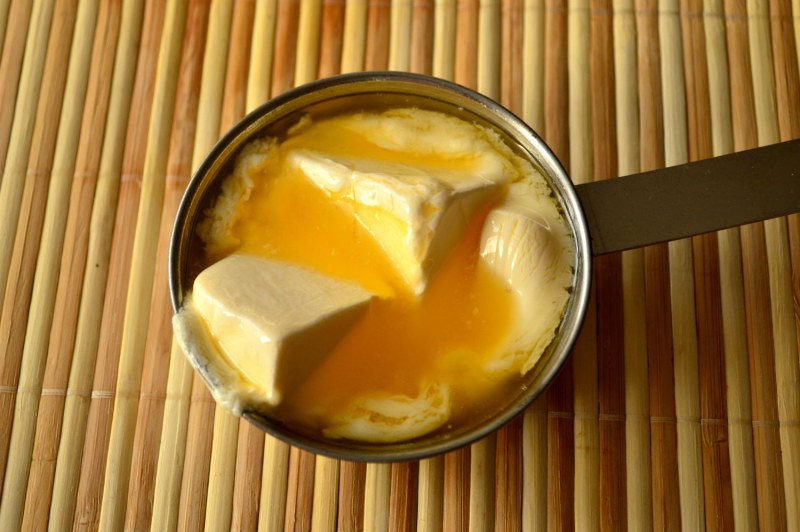
Сливочное масло относится к полезным продуктам. Оно широко используется при приготовлении различной выпечки. Но добавляя этот ингредиент, учитывают, что он несет пользу организму только в маленьких количествах. Иногда целесообразно заменить другим ингредиентом. Причем, блюдо, которое будет приготовлено, ничего не потеряет, а в некоторых случаях будет даже вкуснее.
Можно ли в выпечке заменить сливочное масло растительным, пропорции

Наиболее очевидный вариант для замены это продукты растительного происхождения. По вкусу изделие не поменяется, но растительный компонент в составе содержит в 10 раз меньше насыщенных жиров. Соответственно, не будет риска увеличения холестерина в крови.
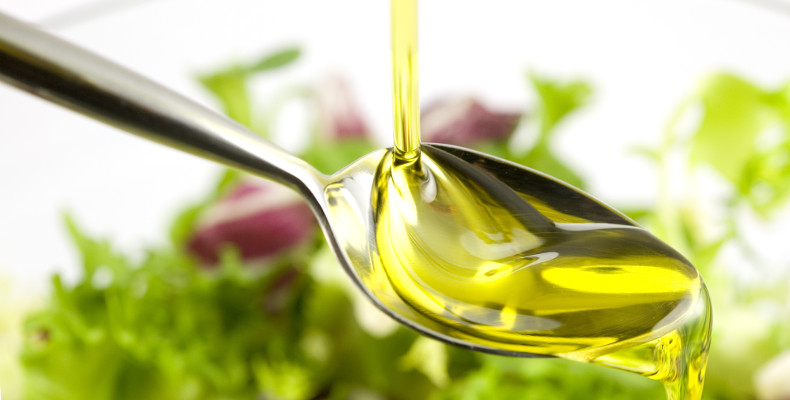
Наиболее подходящий вариант для замены в выпечке является растительное оливковое или подсолнечное. Лучше брать продукт без запаха.
Новый растительный продукт берут в меньшем количестве на 20%. Получается, вместо 10 г сливочного берут 8 г подсолнечного или оливкового продукта.
Если есть возможность приобрести рисовое или кукурузное маслице. Их также можно использовать для замены, они придают выпечке неповторимый деликатный вкус.
Таблица замены сливочного масла растительным в выпечке
Чтобы заменить ингредиент и не нарушить рецепт, используют простую пропорцию. Соотношение простое. Единицу измерения выбирают в зависимости от объемов ингредиента в рецепте и предпочитаемо тары.
| Сливочное | Сливочное в граммах | Растительное на замену | Растительное в граммах |
| 1 ч. л. | 5 |